

Table of Contents
Nighaban Card Program 2026
The Nighaban Card program has emerged as an important social protection initiative aimed at supporting financially vulnerable households across Pakistan. As economic pressures continue to affect low-income communities, the government has introduced this program to ensure that deserving families receive consistent financial assistance. Through the latest rollout, eligible families will receive Rs10500 every three months, helping them manage basic household expenses such as food, education, and healthcare.
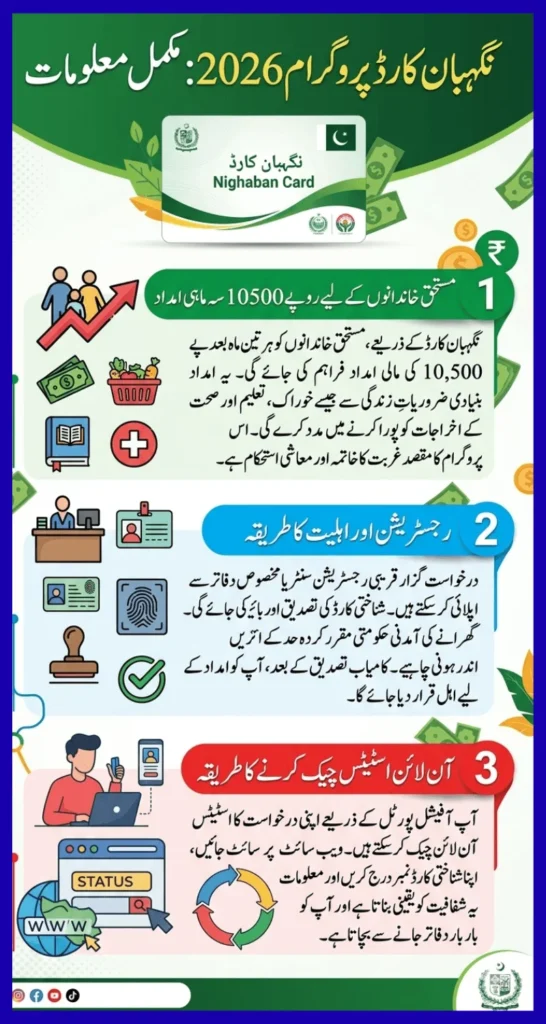
The introduction of the Nighaban Card reflects a broader effort to expand social welfare programs and improve financial inclusion for underserved communities. By using a structured verification and distribution mechanism, the program aims to ensure transparency and timely disbursement of funds. Authorities believe that this initiative will reduce financial stress on struggling families while strengthening the national safety net for vulnerable citizens.
BISP 8171 Check Balance Online Verify Your 8171 Balance Online Using CNIC
Financial Assistance Program for Low-Income Families in Pakistan
Many households in Pakistan face challenges in meeting their daily needs due to inflation and limited income opportunities. Social assistance programs play a crucial role in supporting these families, and the Nighaban Card initiative is designed to complement existing welfare frameworks. The quarterly payment model ensures that families receive predictable financial support throughout the year.
This assistance is particularly beneficial for families living in rural and semi-urban areas where employment opportunities are limited. The funds can help cover essential costs such as groceries, school supplies for children, medical expenses, and utility bills. By providing regular financial aid, the program aims to improve living standards and reduce the economic burden faced by underprivileged households.
New BISP 8171 Survey March 2026 Check Eligibility After The New Dynamic Survey
Nighaban Card Registration Process and How to Apply
The registration process for the Nighaban Card program has been designed to be simple and accessible so that eligible individuals can easily apply. Applicants typically need to verify their identity through their national identity card and confirm their eligibility through the official verification system. Once registered, the authorities review the data to ensure that assistance reaches the right beneficiaries.
To make the process smoother, digital verification systems are also being used in many areas. These systems help reduce delays and prevent duplication of records. After successful verification, eligible families are notified about their enrollment in the program and informed about the procedure for receiving the quarterly payment.
How to Apply for the Nighaban Card
- Visit the nearest government registration center or designated support office.
- Provide a valid national identity card for identity verification.
- Submit basic household and income details for eligibility assessment.
- Complete biometric verification if required by the system.
- Receive confirmation message once registration is successfully processed.
- Wait for official notification regarding approval and payment schedule.
BISP 8171 Phase 4 Installment Update Check Eligibility And Payment Details Online
Quarterly Financial Support to Strengthen Household Stability
The Rs10500 quarterly assistance is designed to offer consistent relief to families struggling with rising living costs. Unlike one-time financial grants, the quarterly payment structure ensures that families have recurring support that can planned for essential needs. This predictable support can make a significant difference in household budgeting.
Regular financial assistance helps families manage unexpected expenses and avoid debt. For example, the funds may help pay school fees, purchase medicines, or cover basic food items during difficult months. By providing scheduled support, the Nighaban Card initiative contributes to economic stability at the household level and promotes long-term financial security.
Benazir Kafalat Disqualification Top 12 Elements New BISP Update
Eligibility Criteria for the Nighaban Card Program
- Applicant must belong to a low-income household
- Possession of a valid national identity card is required
- Family income should fall within the government’s defined poverty threshold
- Applicant should not be receiving similar high-value government financial benefits
- Household verification through official data systems may required
- Priority may given to families with dependents, elderly members, or widows
Stepwise Process For 8171 BISP 2026 Online Registration And CNIC Validation
Checking Nighaban Card Application Status Online
After completing the registration process, applicants can track their application status through the official verification channels. The status checking system allows applicants to stay informed about whether their application has approved, rejected, or is still under review. This transparency helps applicants understand where they stand in the selection process.
Digital tracking systems are increasingly being used in government welfare programs to reduce uncertainty for applicants. Instead of visiting offices repeatedly, beneficiaries can check their application updates using their identification details. This method saves time and ensures that applicants receive timely information regarding their eligibility and payment status.
Steps to Check Application Status
- Visit the official verification portal for the program
- Enter your national identity card number in the required field
- Complete the verification step if prompted
- Submit the request to view the latest application update
- Review the status information displayed on the screen
- Follow further instructions if additional verification is required
BISP 8171 March 2026 Registration Update Detailed Guide To New Survey And 14500 Payment
Economic Impact of the Nighaban Card Welfare Program
The introduction of targeted financial support programs can have a positive effect on the local economy. When low-income families receive financial assistance, they spend the money on essential goods and services within their communities. This spending supports small businesses, local markets, and service providers, creating a ripple effect that benefits the broader economy.
Programs like the Nighaban Card can also reduce financial inequality by providing resources to those who need them most. By ensuring that funds reach deserving households, the government can help bridge economic gaps and support inclusive development. In the long term, such initiatives contribute to improved social stability and economic resilience.
Last Chance To Complete Verification & Get Three Payments From BISP
Transparency and Digital Monitoring in Social Welfare Programs
Modern social welfare initiatives are increasingly relying on digital monitoring systems to ensure fairness and efficiency. The Nighaban Card program uses data verification and monitoring mechanisms to reduce the chances of fraud or duplication. These systems help authorities track beneficiary records and ensure that payments reach the correct recipients.
Transparency in the distribution process is essential for maintaining public trust in government programs. By combining identity verification, digital tracking, and structured payment schedules, the program aims to deliver financial assistance efficiently while maintaining accountability.
Double Payments For Children Enrolled In Benazir Taleemi Wazaif
Future Outlook for the Nighaban Card Initiative
The Nighaban Card rollout represents a significant step toward strengthening social safety programs in Pakistan. As the program expands, more eligible families may benefit from the quarterly financial assistance. Authorities are expected to continue improving the system by introducing digital services, faster verification processes, and improved beneficiary communication.
In the coming years, initiatives like the Nighaban Card could play a key role in addressing poverty and improving economic resilience for vulnerable communities. By providing consistent financial support and ensuring fair distribution, the program has the potential to become an important pillar of the country’s social welfare framework while helping families build a more stable future.
Why Do BISP Beneficiaries Get Disqualified From The Kafalat Program?
Conclusion
The Nighaban Card rollout represents a significant effort to provide structured financial assistance to low-income households in Pakistan. By offering Rs10500 in quarterly aid, the program aims to ease the financial burden faced by vulnerable families and ensure they have support for essential daily needs. With a clear registration process, defined eligibility criteria, and a transparent verification system, the initiative designed to deliver assistance efficiently and fairly to deserving beneficiaries.
As the program continues to expand, it has the potential to strengthen the country’s social welfare framework and improve economic stability for many struggling households. Regular financial support can help families better manage their expenses, reduce financial stress, and improve their overall quality of life. If implemented effectively with proper monitoring and transparency, the Nighaban Card initiative could become an important step toward long-term poverty reduction and stronger community resilience in Pakistan.
How To Verify BISP Taleemi Wazaif Payment Online 8171 CNIC Check