
Table of Contents
Ehsaas & BISP 8171 Shocking Update
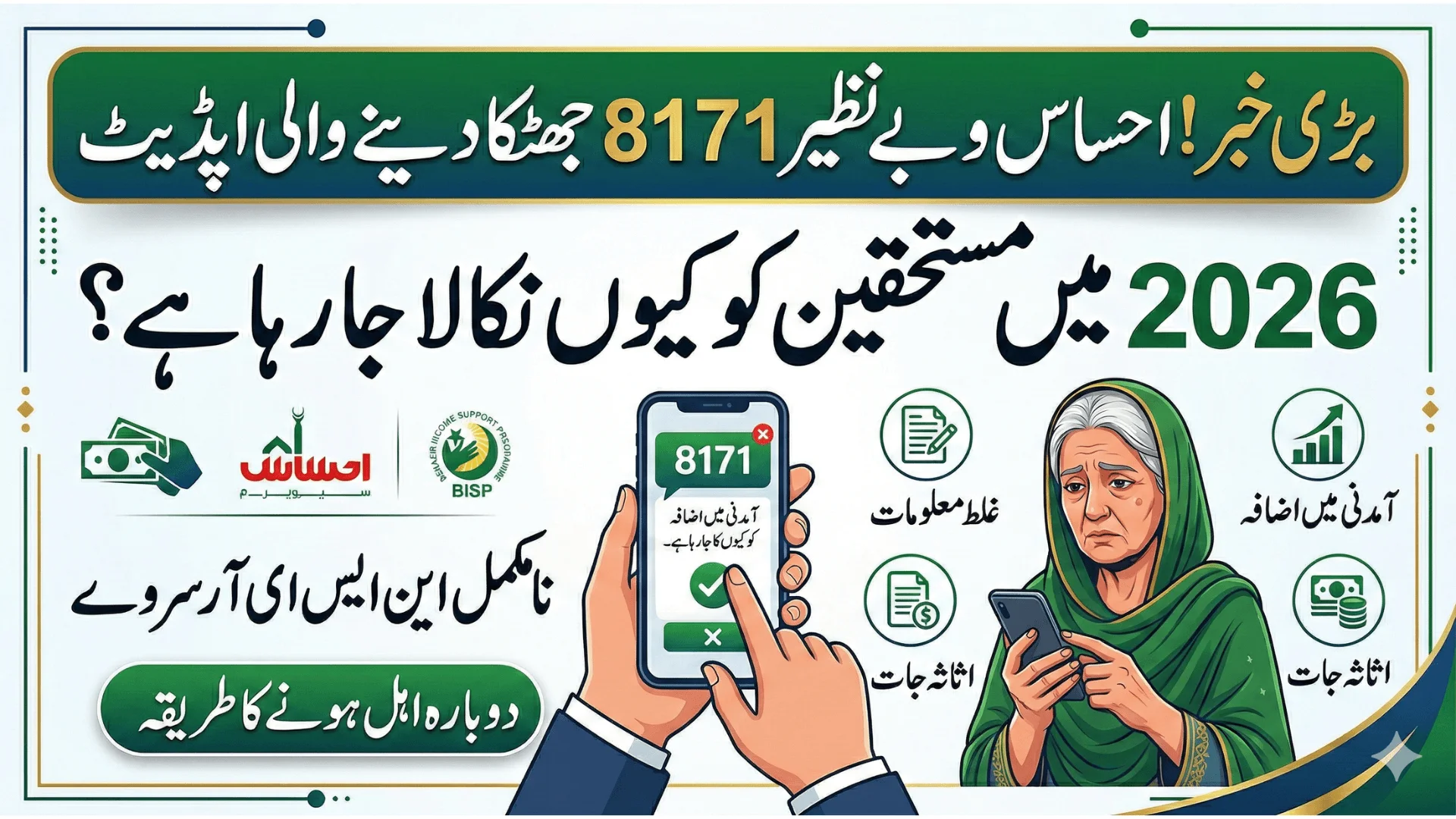
Ehsaas & BISP 8171 Shocking Update Why Beneficiaries Are Being Removed in 2026 has become a trending concern for thousands of families across Pakistan. Many individuals who have been receiving quarterly financial assistance through the 8171 portal suddenly discover that their status has changed to “Not Eligible.” This unexpected removal has caused confusion, worry, and questions about how to restore benefits. The Benazir Income Support Program (BISP) and the Ehsaas Program have clarified that these removals are not arbitrary.
Instead, they are part of a regular verification and update process aimed at ensuring that assistance reaches only the most deserving and eligible households. In this article, we will explain why beneficiaries are being removed, the most common reasons behind disqualification, and how applicants can regain their status in 2026.
8171 Ehsaas Kafalat 2026 Eligibility Criteria, 8171 Portal Check & New Payment Update
Why Are Beneficiaries Being Removed in 2026?
In 2026, the government has introduced stricter digital verification mechanisms to increase transparency in the distribution of social welfare funds. With the rise in fraudulent claims, duplicate registrations, and outdated data, authorities are proactively auditing records.
The main reasons for removal generally include:
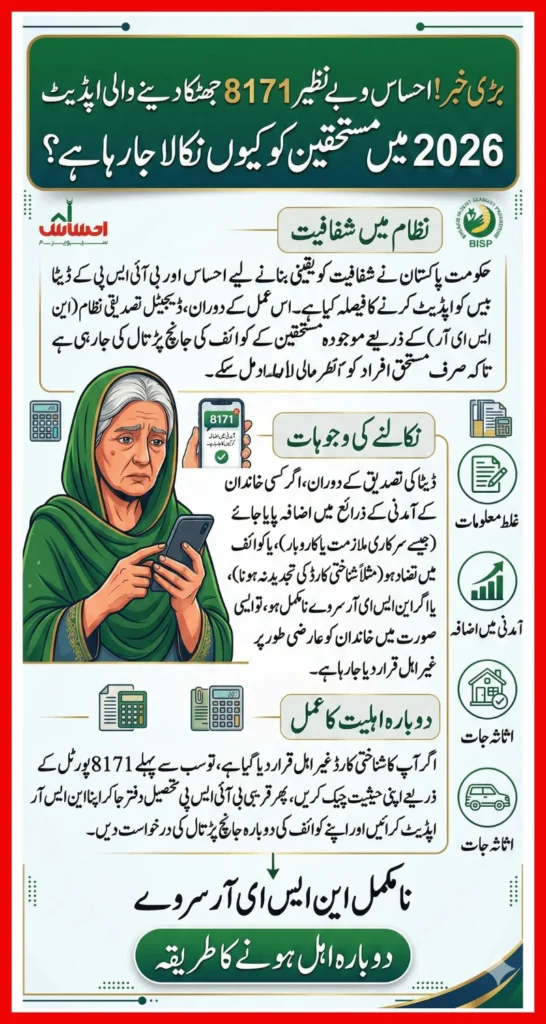
- Change in Household Financial Status: If a family’s income increases or a member begins receiving government salaries, pensions, or business profits, the household may no longer meet the poverty threshold.
- Incorrect or Outdated Personal Information: Mismatched CNIC details, expired identification, or changes in marital status without proper update can result in automatic disqualification.
- Incomplete or Missing NSER Survey Data: Beneficiaries are required to periodically update their National Socio-Economic Registry (NSER) survey. Failure to do so can lead to removal.
- Duplicate Family Registration: Only one beneficiary per household is allowed. Multiple entries can cause system conflicts and suspension of payments.
- Asset Ownership Detected: If the verification system identifies ownership of vehicles, property, or registered businesses, it may flag the household as financially stable and ineligible.
BISP March 2026 Quarterly Payment Increased To 14500 Check Installment Date
The Role of 8171 in Monitoring Beneficiaries
The 8171 portal is the primary communication channel between beneficiaries and the BISP/Ehsaas system. It provides instant notifications about eligibility, payment status, or removal.
Through 8171, individuals can:
- Check the current status of their CNIC in the program.
- Receive updates about new quarterly payments.
- Identify whether they have been temporarily or permanently removed.
The introduction of this system allows for greater transparency and prevents fraudulent claims, but it also means that even minor data inconsistencies can trigger removal notices.
BISP Taleemi Wazaif Check Online Through CNIC For 2026
Common Reasons Beneficiaries Are Being Removed
1. Financial Stability Beyond Eligibility Threshold
One of the leading causes of removal is an increase in household income. For example, if a spouse begins earning a government salary or the family starts receiving pensions, the household’s poverty score is recalculated. Consequently, the system may consider the family financially stable and halt assistance.
2. CNIC Errors and Expired IDs
Expired or incorrect CNICs are a frequent cause of disqualification. Similarly, if marital status changes (such as widowhood or divorce) but the database is not updated, the system may not recognize eligibility correctly.
3. Unupdated NSER Survey
The NSER survey ensures that the government has the most recent information about household income, size, and living conditions. If a survey remains incomplete or outdated, eligibility may paused until data is verified.
4. Duplicate Household Registration
If two women from the same household are registered separately, the system may automatically remove one or both entries to prevent duplication. This measure ensures fair distribution of funds.
5. Detected Ownership of Assets
The 8171 system cross-checks assets like vehicles, property, or registered businesses. If a beneficiary owns substantial assets, she may no longer qualify for low-income financial assistance.
PMT Score Update For Benazir Kafaalat Rs 13500 Payment
How Beneficiaries Can Become Eligible Again
Being removed does not always mean permanent disqualification. Many beneficiaries can restore their eligibility by following specific steps:
- Check Status Through 8171: Use the web portal or SMS service to verify the reason for removal.
- Update CNIC Information: Renew expired ID cards or correct marital status at NADRA.
- Complete or Update NSER Survey: Visit your nearest BISP Tehsil Office and provide accurate household data.
- Request Re-Verification: If the removal appears to be a mistake, formally request a review at the BISP office.
- Resolve Duplicate Registration: Ensure only one eligible household member remains registered to eliminate conflicts.
Benazir Kafalat Payment Verification Process Check By Web Portal
Important Tips to Avoid Future Removal
To prevent being removed again, beneficiaries should take precautionary measures:
- Keep CNIC and personal data updated at all times.
- Respond promptly to survey notifications.
- Avoid submitting duplicate applications.
- Provide honest financial information during registration.
- Use only official channels for status checks; do not rely on agents.
Understanding the 2026 BISP & Ehsaas Verification Process
The 2026 update emphasizes digital verification, automated cross-checks, and biometric authentication. All beneficiary data is linked to national databases to ensure accuracy. Consequently, even small inconsistencies, such as a slight increase in income or a delayed survey update, can trigger system-generated removal. While this may seem strict, it ensures that financial assistance reaches the households that truly need it, which is the primary goal of both the BISP and Ehsaas programs.
BISP 8171 Ineligibility Causes, Solutions, And Next Steps
What to Do If You Disagree With Removal
If you believe your removal is incorrect:
- Collect supporting documents such as income statements, property records, or marital certificates.
- Visit your nearest BISP office for an official review.
- Submit a request for re-verification, explaining why your household still qualifies.
After the authorities reassess your data, eligibility may restored if your household meets the poverty score requirements.
BISP 8171 Payment Status Check Online Via Official Website
Final Thoughts
The 8171 Ehsaas & BISP update in 2026 may appear alarming, but it is part of an effort to improve transparency and ensure that financial assistance reaches the most deserving families. While removal messages are common, many disqualified beneficiaries can regain eligibility by correcting their CNIC details, completing the NSER survey, and requesting re-verification.
So by staying informed, keeping records accurate, and responding promptly to official notifications, families can secure continuous support. Understanding why removals happen empowers beneficiaries to act quickly, restore their payments, and maintain household stability in 2026 and beyond.
How To Check Kisan Card Phase-II Balance Online